

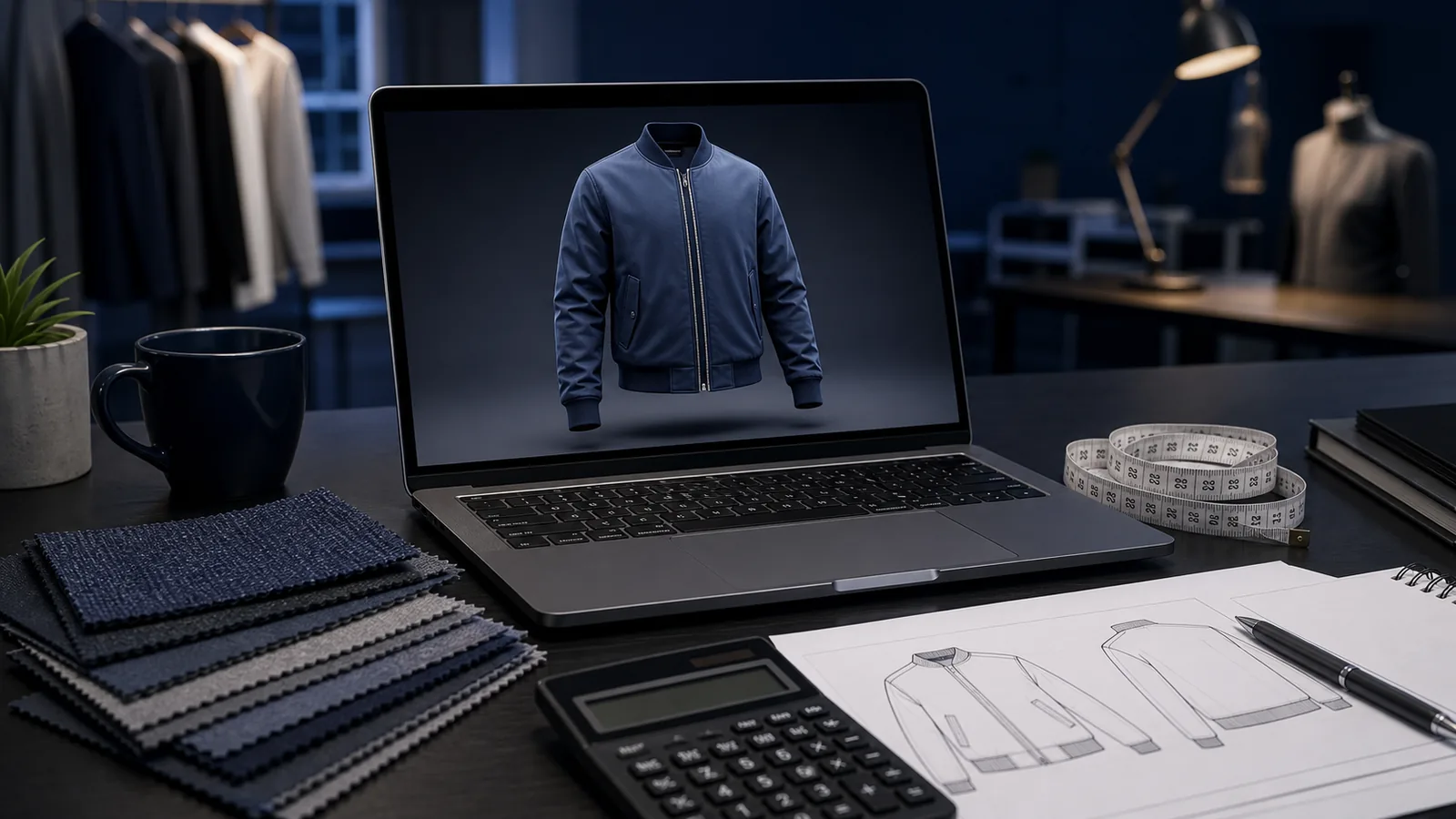
If you are planning to move part of your apparel development workflow into 3D, one of the first questions is simple: how much should CLO3D apparel design cost? The honest answer is that pricing depends on product complexity, source materials, fit requirements, fabric accuracy, colorways, render needs and how production-ready the final files need to be.
This guide explains the main cost drivers so fashion brands, private label sellers, manufacturers and ecommerce teams can budget properly before requesting a quote.
What CLO3D apparel design usually includes
A professional CLO3D apparel design project can include digital pattern preparation, garment simulation, fabric and trim setup, colorway creation, fit review, image rendering, animation, tech pack visuals and source-file handoff. A simple t-shirt or sweatshirt is very different from a lined jacket, technical outerwear style or multi-layer activewear item.
Main pricing factors
- Garment complexity: basic tops cost less than jackets, coats, structured garments and multi-layer products.
- Pattern availability: a clean DXF or existing pattern lowers work time, while sketch-only projects require more development.
- Fabric realism: scanned or physically measured fabric data improves realism but adds preparation work.
- Colorways and trims: each color, print placement, zipper, label, drawcord, rib, button or hardware detail adds setup time.
- Render requirements: ecommerce images, detail shots, lifestyle-style renders and animation all require different lighting and output work.
- Revision depth: design exploration requires more iteration than production visualization from an approved tech pack.
Typical budget ranges
For planning purposes, simple 3D apparel development often starts at a lower per-item rate, while complex garments with custom materials, trims, multiple views and high-quality renders require a larger project quote. Collection-level work is usually priced as a package because shared materials, blocks and lighting setups can be reused across styles.
What to prepare before requesting a quote
- Garment sketches or reference photos
- Tech pack or measurement specification
- Pattern files if available
- Fabric photos, scan files or material references
- Colorway list and print artwork
- Required output views: front, back, side, detail, ecommerce, catalog or buyer presentation
- Deadline and revision expectation
How 3D can reduce total development cost
The value of CLO3D is not only the render. It can reduce physical sampling rounds, help merchandising teams review styles faster, support ecommerce content creation and allow design teams to visualize colorways before production. For brands that develop many SKUs, the savings often come from speed, fewer physical samples, fewer photoshoot dependencies and clearer approval communication.
When a custom quote is better
A custom quote is best when you have multiple garments, a seasonal collection, special fabric requirements, custom avatars, complex trims, animation, ecommerce image packages or tech pack deliverables. In those cases, per-item pricing may not reflect the real workflow.
BinaryCloth provides CLO3D apparel design services for brands that need virtual samples, ecommerce renders, tech pack visuals and digital product development support. You can also request a project quote with your garment references and output requirements.
FAQ: CLO3D apparel design cost
Is CLO3D cheaper than physical sampling?
It can be cheaper when the goal is to review style, colorway, silhouette and visual presentation before committing to multiple physical samples. Physical samples are still important for final fit and production confirmation, but 3D can reduce unnecessary early sample rounds.
Why do similar garments have different 3D costs?
Two jackets can look similar to a shopper but require very different 3D work. Lining, quilting, trims, hardware, fabric behavior, pattern quality and render requirements can all change the production time.
Can one 3D garment create multiple marketing assets?
Yes. Once the garment is built correctly, it can support colorway previews, ecommerce angles, catalog images, presentation visuals and sometimes animation or model-asset handoff, depending on the original project scope.
Official tool reference
Because CLO3D pricing and service scopes depend heavily on garment complexity, it helps clients understand the software category itself. The official CLO3D site is a useful reference for the 3D garment design workflow behind virtual samples, digital fittings and apparel visualization.
